

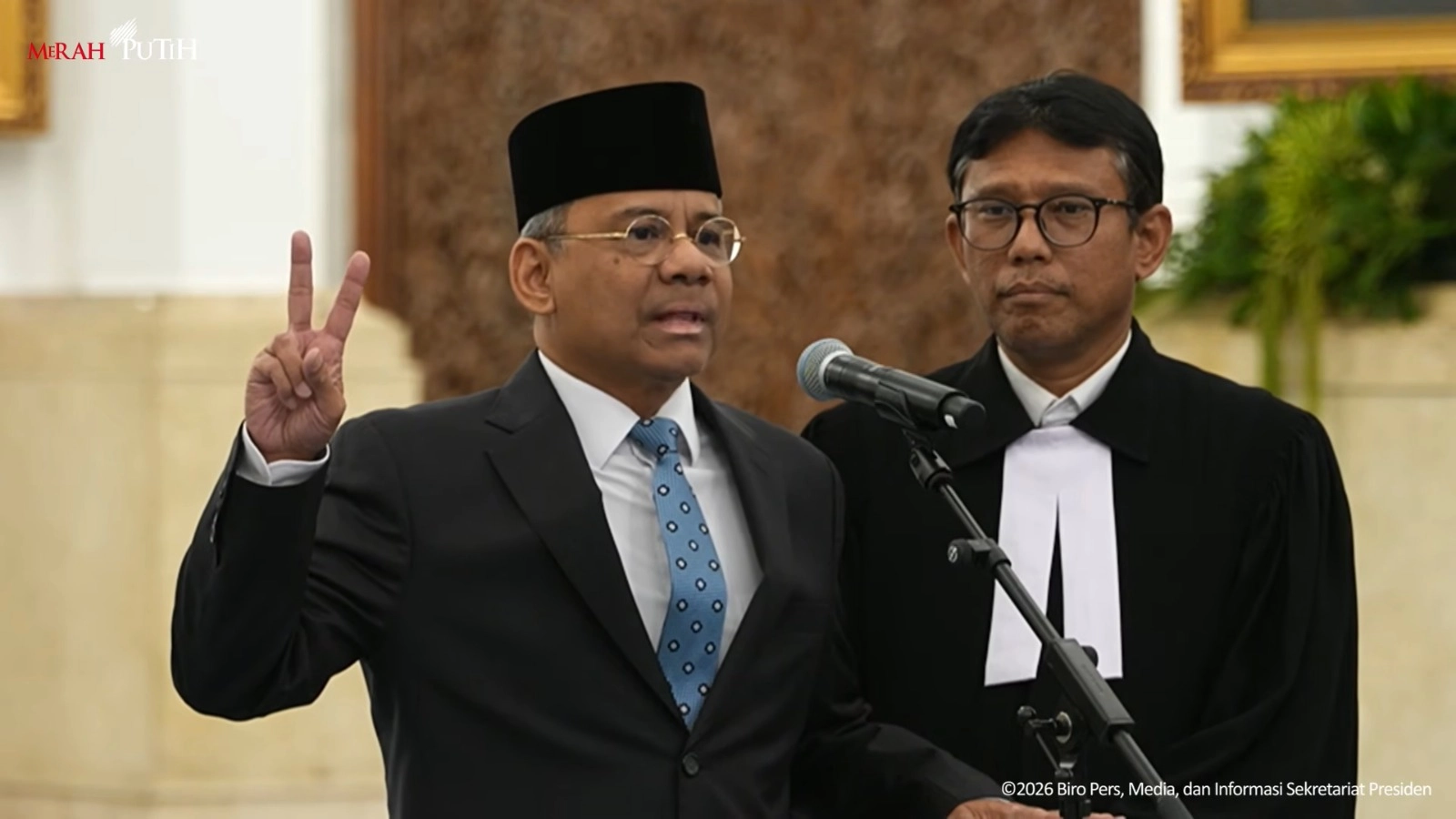
A new Finance Minister has been appointed. So, what actually changes?
This question emerged after President Prabowo Subianto inaugurated Suahasil Nazara as Minister of Finance on September 14, 2026, replacing Purbaya Yudhi Sadewa. Suahasil is not a new figure within the Ministry of Finance. He previously served as Deputy Minister of Finance from 2019 to 2024 and returned to the position in 2024–2026.
A change in leadership naturally raises questions about the direction of economic policy. However, understanding this change does not require us to stop at the question of who the new Finance Minister is. A more interesting question is: what will be the priorities in managing the state budget, and how will those priorities affect people’s everyday lives?
The State Budget Is More Than Just Numbers
For some people, the state budget—or APBN—may sound like a collection of numbers that has little to do with everyday life. In reality, the APBN is one of the government’s key instruments for influencing the economy. Through the APBN, the government collects revenue, primarily from taxes and non-tax state revenue, and allocates it to various needs, including education, healthcare, social protection, infrastructure development, subsidies, and government priority programs. In other words, every decision regarding the APBN is essentially a decision about how limited resources are allocated among needs that are also virtually unlimited.
This is where the fundamental economic problem emerges. The government cannot maximize every objective at the same time. Increasing government spending can help sustain economic activity and generate a multiplier effect. However, spending must also be balanced with the government’s capacity to generate revenue and secure financing in order to maintain fiscal health. Conversely, maintaining fiscal prudence does not mean that the government should stop spending. The challenge is to ensure that every rupiah spent generates sufficiently large benefits for society.
Growth or Stability?
In 2026, the government positioned the APBN as an instrument that supports economic growth while maintaining economic stability. In implementing the budget, government spending was directed toward supporting economic activity, while the deficit and financing were managed in a measured manner.
The government has also stated that the 2027 Draft State Budget (RAPBN 2027) is designed to promote economic growth and public welfare while maintaining the health of the state budget. Thus, the issue is not simply a matter of choosing between growth and stability. Both are interconnected objectives, but pursuing them can involve trade-offs in practice. Higher government spending can stimulate demand and economic activity. However, when fiscal space is limited, the government must determine which programs are most urgent, who should be targeted, and how they should be financed.
On the other hand, fiscal restraint can help maintain fiscal credibility, but it must also take into account its potential effects on economic growth, public services, and groups that depend on government support. Therefore, the success of fiscal policy should not be measured solely by how much the government spends, but also by how effectively that spending generates benefits.
So, What Changes?
Suahasil’s initial statements provide several indications of the direction he intends to maintain. He has emphasized the importance of safeguarding the health and credibility of public finances, while ensuring that the APBN continues to support the government’s priority programs and serve as a driver of economic growth. He has also highlighted the importance of public communication in maintaining the credibility of the state budget.
However, based on these statements alone, we cannot yet conclude that the change in Finance Minister will result in a major shift in fiscal policy.
Why?
Because fiscal policy is not determined by a minister alone. The APBN is the result of a process of planning, deliberation, and decision-making involving both the government and the House of Representatives (DPR), while also being shaped by a wide range of domestic and global economic conditions.
What is more interesting to observe is how these priorities are translated into actual budgetary choices. Will spending be directed more heavily toward programs that generate short-term economic effects? How will the government maintain social protection while simultaneously improving productivity? How can state revenue be strengthened without placing excessive burdens on society? And how will the government ensure that priority programs actually generate benefits that people can feel?
From the State Budget to Everyday Life
Ultimately, the APBN is not merely a matter for the government or economists. When people enter the workforce, they encounter taxes. When energy prices change, transportation costs and the prices of various goods may also be affected. When the government promotes investment and business activity, such policies can contribute to job creation. When inflation rises, people’s purchasing power can also change.
Therefore, a change in Finance Minister is not simply about who occupies the position. What matters more is understanding the policy choices that are made, the trade-offs that arise, who benefits, who bears the consequences, and whether those benefits can be sustained over the long term.
This is where economics becomes relevant to everyday life. Economics is not merely about growth figures, deficits, taxes, or government spending. Economics is about how choices are made when resources are limited—and how those choices affect our lives.